
Is My Child Shy or Anxious? How to Tell the Difference.
Have you ever watched your child hang back at a birthday party, hide behind your legs when a neighbor says hello, or go quiet the moment a teacher asks them a question, and found yourself wondering whether this is shyness or something more? Most parents have explained a quiet child to other adults by saying they're shy, and for many kids that's true, since some children are naturally slower to warm up and need a little extra time before they feel comfortable joining in. If you've started asking yourself where shyness ends and anxiety begins, you're not alone, and noticing that question is a thoughtful and caring thing to do as a parent.
The two can look alike from the outside, and anxiety in quiet kids often goes unrecognized for years, since a child who keeps to themselves rarely draws the same attention as a child whose struggles show up as disruptive behavior. The difference usually becomes clearer when you look at what happens over time, and knowing what to watch for can help you understand what your child is experiencing and what kind of support might help.
How Shyness and Anxiety Differ
Shyness is part of a child's temperament, and a shy child usually warms up once they've had time to settle in, feel safe, and get to know the people around them. Ten minutes into a playdate, they're building with blocks alongside their friend, and by the third week of school, they're chatting easily with the kids at their table. Anxiety tends to follow a different pattern. Instead of easing as a situation becomes familiar, the worry often stays steady or grows over time, and it starts to shape what your child is willing to try, where they're willing to go, and how much of their energy goes into getting through an ordinary day.
Signs to Look For
Does the worry follow your child home? Anxious kids often carry their concerns well past the moment that sparked them, which can look like a long string of "what if" questions at bedtime, trouble falling asleep, or asking for the same reassurance again and again even after you've answered.
Are you noticing physical complaints? Stomachaches, headaches, and nausea before school, activities, or new situations are some of the most common ways anxiety shows up in children, especially when the doctor hasn't found a physical cause and the symptoms fade once the stressful moment has passed.
Is your child's world getting smaller? You might notice them saying no to activities they used to enjoy, asking to skip practice or a friend's party, or resisting school in the mornings, and over time those small avoidances can add up to a life with fewer places where they feel comfortable.
Does your child hold it together all day and fall apart at home? Many anxious kids spend the school day working hard to keep their worries contained and finally let them out where they feel safest, which is with you, so the meltdowns, tears, and irritability over small things that show up after school are often a sign of how much effort the day required.
Does a fear of mistakes get in the way? You may see your child erasing their work until the paper tears, refusing to try something new unless they're sure they'll get it right, or becoming deeply upset over small errors that other kids shrug off.
Does your child freeze in certain moments? Some anxious children find themselves unable to speak when called on in class, when ordering at a restaurant, or even with familiar adults outside the home, and they often feel frustrated with themselves afterward for not being able to get the words out.
If you're reading this and recognizing your child in several of these places, please know that you haven't failed them by calling them shy, and you're not a bad parent for not seeing it sooner. Anxious kids are often skilled at looking calm on the outside, and many parents only start to connect the dots when the worry begins spilling into more areas of their child's life.
How Art Therapy and Counseling Can Help
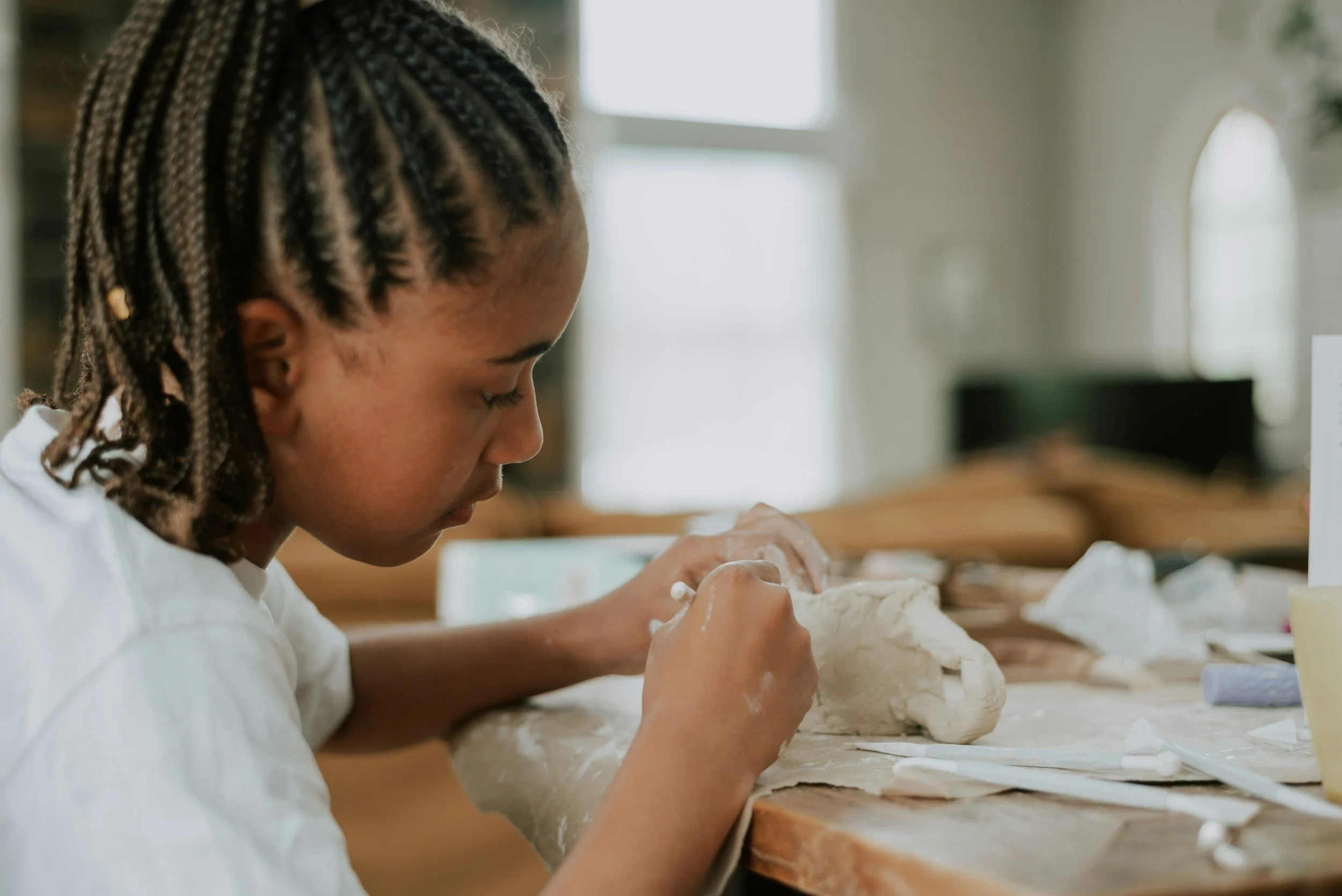
Many children can't explain what they're worried about, and asking them to talk about it directly can sometimes make the worry feel bigger. Art therapy gives kids another way in, and drawing, painting, or building with clay lets them give their worries a shape and color they can see, set them down on paper, and look at them from a little distance alongside a therapist who helps them make sense of what they've created. The steady, focused process of working with art materials can also help a child's body settle, and kids don't need any artistic skill to benefit from it.
Mental health counseling helps children and teens understand what anxiety is, notice how it shows up in their thoughts and bodies, and build coping skills they can use at school, at home, and everywhere in between. Our counselors use evidence-based approaches like cognitive behavioral therapy and mindfulness, with creative arts woven in, and they partner with parents so you have strategies to support your child between sessions. For kids who connect more with music, music therapy offers many of the same benefits through songwriting, drumming, and active listening.
At The Sonatina Center, we work with anxious children and teens every week, and we know how much relief families feel when their child finally has the tools and the language to understand what's been happening inside them.
If you're noticing some of these signs in your child and want to talk through what you're seeing, we'd love to hear from you. Schedule a free phone consultation and we'll help you decide whether art therapy, counseling, or music therapy is the right fit for your family.