
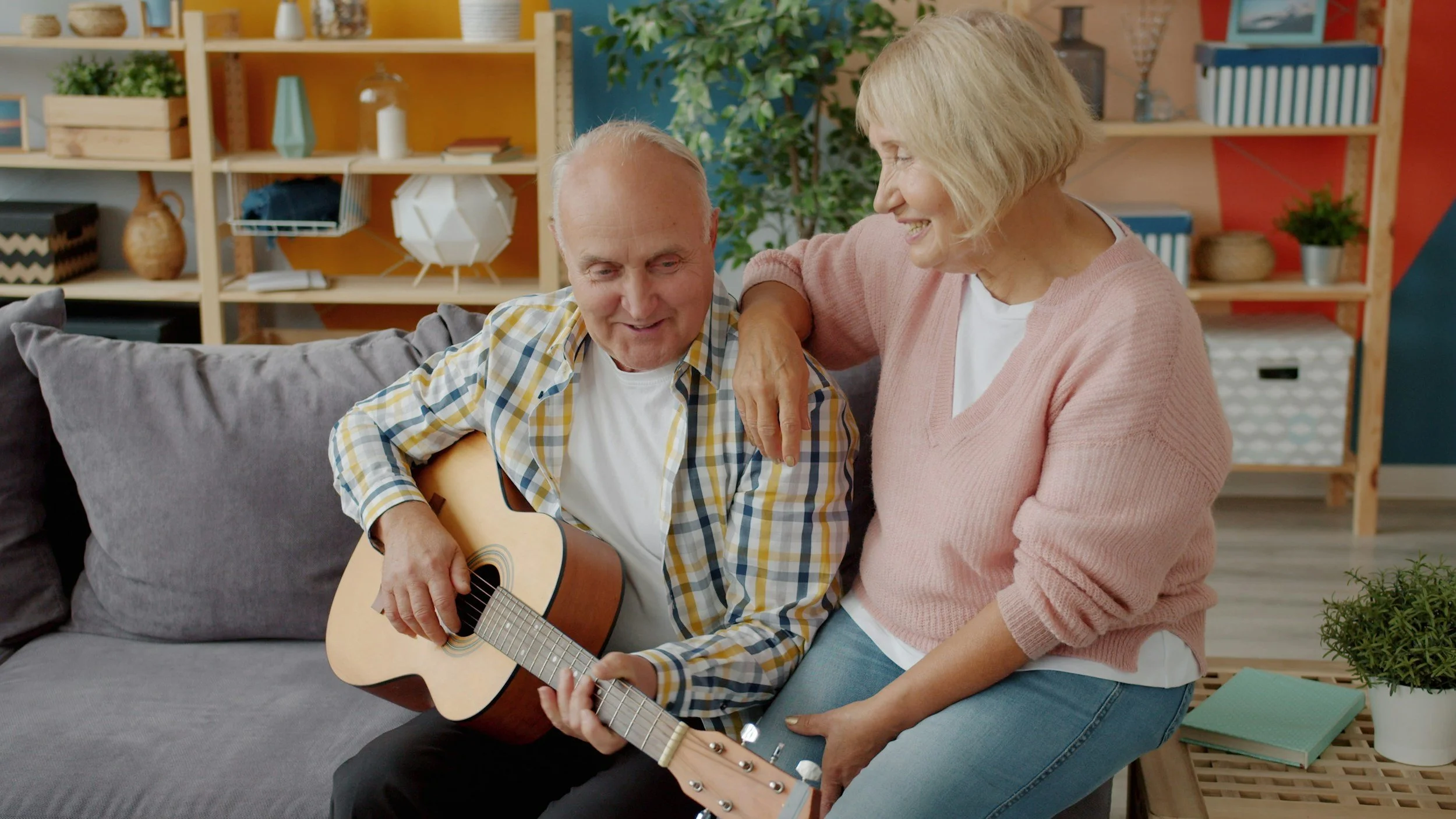
THERAPY FOR OLDER ADULTS IN DOVER, NH
Connection, comfort and joy at every stage of life.
Music therapy for older adults living with memory loss, dementia, illness or big life changes, helping them stay connected to the people and memories that matter most. Sessions take place at our Dover, NH office, in assisted living communities across the Seacoast, and at home for hospice care.
Therapy Can Help Your Loved One

Stay connected to the people they love

Find comfort and calm during hard days

Reach memories through familiar songs
When Someone You Love
Is Changing
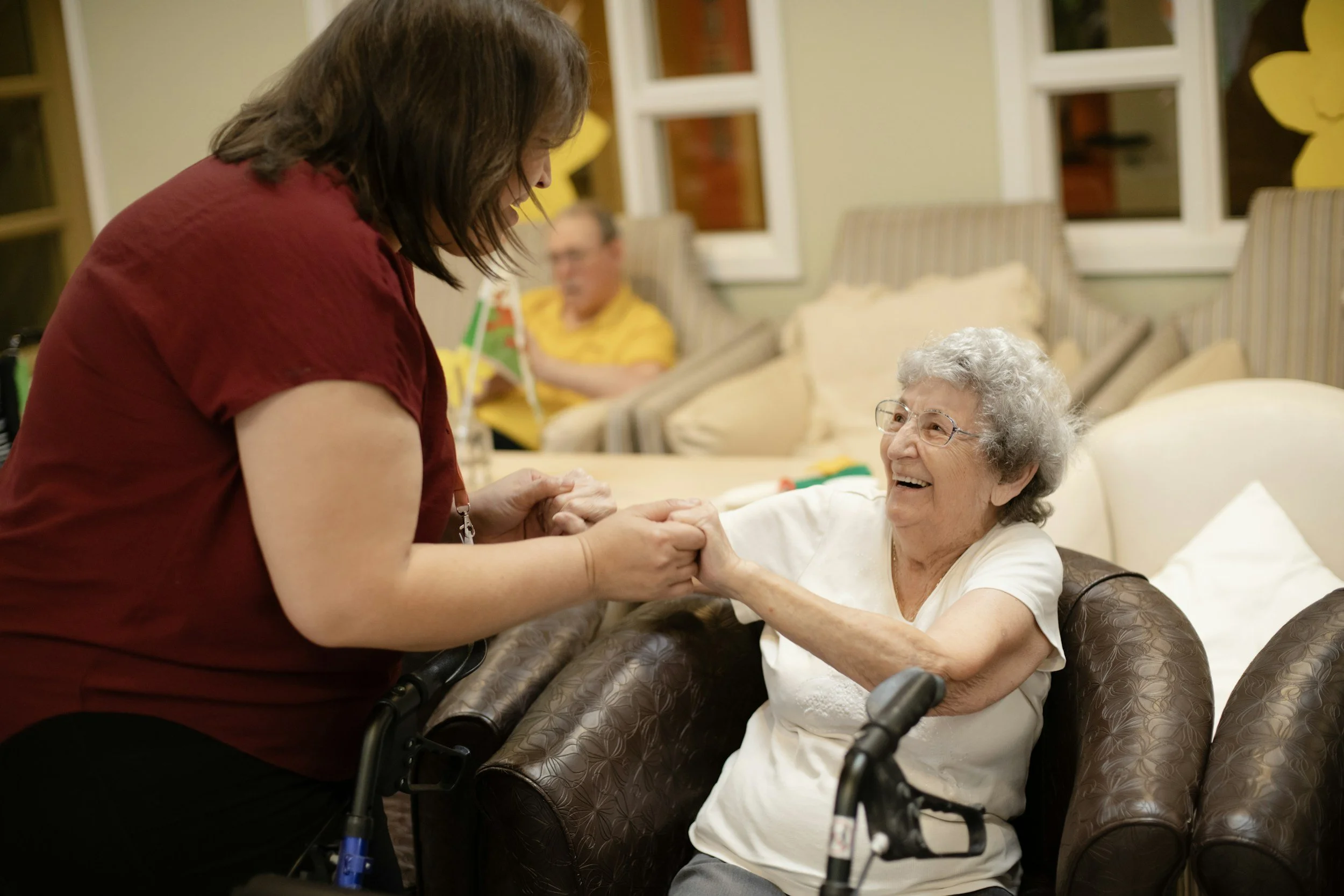
Are you noticing your parent or loved one becoming more withdrawn, confused or anxious, struggling to find words, or seeming like a quieter version of the person you’ve always known? You’re not alone, and feeling helpless or heartbroken watching it happen is completely understandable. Memory loss, illness and aging bring changes that are hard on the whole family, and many caregivers carry that weight quietly while trying to hold everything together.
At The Sonatina Center, our music therapists work with older adults at our Dover office, in assisted living communities and at home. Music reaches parts of the brain that often stay strong even as memory fades, so a familiar song can bring back a name, a story or a smile, and give families moments of connection they may have thought were gone.
If you’re wondering whether music therapy is the right fit for your loved one, we’re happy to talk it through during your free call.
Does This Sound
Like Your Loved One?
Every person is different, but these are some of the changes families tell us about most often:
Memory loss or confusion that’s making daily life harder
Pulling away from friends, family or activities they used to enjoy
Restlessness, agitation or anxiety, especially later in the day
Trouble finding words or following conversations
Sadness, loneliness or low mood after a loss or a move
Adjusting to assisted living or a new level of care
Living with a serious illness or nearing the end of life
Seeming less like themselves, with fewer moments of joy
If a few of these feel familiar, a free call is a good place to start.
How We Help
MUSIC THERAPY
Singing familiar songs, playing simple instruments and moving to music help older adults stay engaged, ease anxiety and connect with the people around them. No musical experience is needed.
MEMORY CARE
Music from someone’s younger years can bring back memories, words and emotions that seem out of reach, helping people living with dementia feel more like themselves, even for a little while.
HOSPICE & END OF LIFE
At home or in care, our music therapists offer comfort, calm and a way for families to share meaningful moments, through favorite songs, legacy projects and quiet support during a tender time.
FAMILY SUPPORT
Caring for someone you love can be exhausting and lonely. We include families in sessions when it helps, share simple ways to use music to connect at home, and make sure you feel supported too.
Music Therapy for Older Adults Can Help With...
-
Music therapy can help when memory loss is making it harder for your loved one to recognize people, follow conversations or feel like themselves.
Familiar songs reach parts of the brain that often stay strong even as memory fades, so our music therapists use them to spark recognition, conversation and moments of connection.
-
Music therapy can help when your loved one becomes restless, upset or anxious, especially later in the day or during changes in routine.
Our music therapists use calming music, rhythm and breathing to ease agitation and help them feel safe and settled.
-
Music therapy can help when your loved one seems withdrawn, sad or isolated, or has lost interest in the things that used to bring them joy.
Singing, playing and sharing music create a sense of purpose and connection, and give them something to look forward to.
-
Music therapy can help when words are getting harder to find, whether from dementia, stroke or illness.
Singing uses different pathways in the brain than speaking, so many people can sing words they struggle to say. Our music therapists build on that to support expression and connection.
-
Music therapy can help when your loved one is adjusting to a big change, like a move to assisted living, a new diagnosis or a new level of care.
Familiar music brings comfort and a sense of home, helping them feel more grounded during an unsettling time.
-
Music therapy can help when a stroke or brain injury has affected movement, speech or memory.
Our music therapists use rhythm, singing and instruments to support speech, movement and attention, alongside the rest of your loved one’s care team.
-
Music therapy can help when your loved one is nearing the end of life and comfort matters most.
Our music therapists offer calming music, favorite songs and legacy projects, like recording songs or stories for family, to ease pain and anxiety and create meaningful moments together.
-
Music therapy can help when your loved one is grieving a spouse, friend or the life they used to have.
Grief doesn’t follow a schedule at any age. Our music therapists give them room to feel what they feel, often through the songs that hold their memories.
Meet Our Older Adult Therapists
-
![Elisha Rivera, MT-BC, music therapist at The Sonatina Center]()
-
![]()
-
![Madeleine Christenson, MT-BC, CDP, art therapist at The Sonatina Center]()
Madeleine Christenson, MT-BC, CDP
(She/Her)
Music Therapist
Certified Dementia Practitioner



Getting Started is Free
Every new client starts with a free 20-minute phone call. Our Intake Coordinator will walk you through our process and policies and learn a little about your loved one, so together you can decide whether music therapy is a good fit and where sessions would work best. It’s also a chance to ask any questions you have before getting started.
What To Expect
WHERE: Sessions take place at The Sonatina Center in Dover, NH, in assisted living communities across the Seacoast, and at home for hospice care.
YOUR FIRST VISIT: A 60-minute intake session where your loved one’s music therapist gets to know them, including their favorite music and the songs that hold meaning for them, completes an initial assessment, and sets goals with you and your family.
CHECKING IN: We review progress and goals with you every 90 days, or sooner if needed.
INVESTMENT: Rates vary by service and are reviewed each year, and you’ll always hear about any changes ahead of time. View our current service rates here.

Scholarships & Accessibility
Free Sessions for BIPOC Clients
The Sonatina Center is committed to bridging the gap of accessibility for the Black, Indigenous, and People of Color community. We offer free individual music therapy, art therapy, and counseling sessions to BIPOC clients. We have 6 scholarship spots available at a time, and we keep a waiting list when they’re full. Please contact us for more information.
Using Your Insurance Benefits
Depending on your plan, you may be able to get part of the cost of sessions reimbursed through your out-of-network benefits. We provide a monthly superbill with the CPT codes and provider information your insurance company needs, so you can submit it directly. As a private-pay practice, we’re happy to walk you through how this works during your free call.
Frequently Asked Questions
-
Yes, as much as you’d like. We share goals and progress with you, welcome family members to join sessions when it helps, and can share simple ways to use music to connect with your loved one at home.
-
No. Sessions are built around their favorite music and what they’re able to do that day, and no experience is needed. Many people who have never played an instrument light up with a familiar song.
-
Yes. Our music therapists see clients in assisted living communities across the Seacoast. We’re happy to coordinate with staff to find a time and space that works.
-
Yes. We offer in-home music therapy for people receiving hospice care, focused on comfort, calm and meaningful time with family.
-
Music therapy can still help. Rhythm, melody and familiar songs often reach people when words no longer do, and our therapists adjust each session to meet your loved one where they are.
-
Sessions are usually 30 to 90 minutes, depending on your loved one’s needs and energy. We’ll recommend how often during your free call and adjust as things change.
-
We’re a private-pay practice, and we provide a monthly superbill you can submit to your insurance company for possible out-of-network reimbursement.
-
We’re an outpatient practice and aren’t able to respond to emergencies. If your loved one is in crisis, call 911 or go to your nearest emergency room. You can also call or text 988, the Suicide & Crisis Lifeline, any time.
Ready To Take The First Step?
Your free 20-minute call is a chance to share what’s going on and ask any questions, with no pressure to commit.