
Why is Spinning Good for Kids?
If you've ever watched a music therapy session at The Sonatina Center, you may have noticed something a little unexpected — a big gathering drum flipped upside down with a child sitting inside, spinning. It's one of our most popular activities, and there's real science behind why we do it. Here's what's actually happening when we spin kids in the drum, and why it matters for their development.
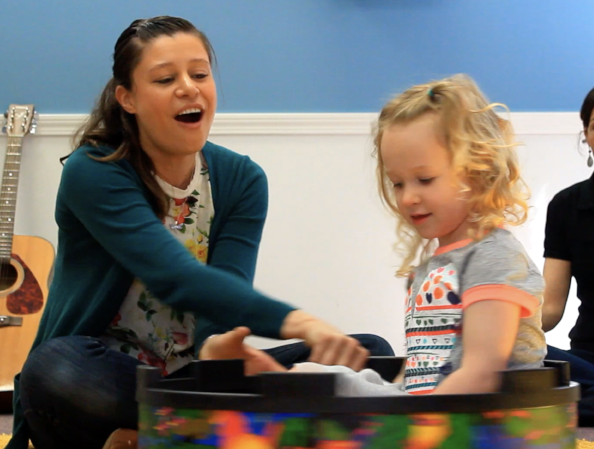
First of all, to give credit where credit is due - the song and activity we frequently use when spinning in the drum is one that I picked up from a music therapist colleague in Florida, Amy owner of Wholesome Harmonies. You can check it out along with a few of her other cool activities for stimulating our sensory systems here.
So why do I pull out the Big Drum and immediately flip it over so we can sit inside it instead of playing it like a drum? The answer…. (drum roll please - pun intended)
VESTIBULAR SENSORY STIMULATION!
Development of the Vestibular Sense is crucial to a child’s development and has a huge impact on your child’s physical, emotional, and cognitive skill development. The vestibular system takes a large part in the development of balance, visual tracking abilities, motor skills, development of muscle tone, language development, self-care skills and the ability for a child to develop self-regulation.
Stimulating the vestibular system in a controlled and structured way, such as how we do in our gathering drum activity, has been linked to several benefits including: decreased self-stimulation, decreased hypersensitivity, increased balance, increased body awareness, and my favorite increased concentration and attentiveness.
In fact, that last benefit is why you will notice that we often get into the drum fairly early in our session. Once we’ve warmed up with hello and some shakers and we’re feeling comfortable, I use this activity to give a quick boost to our system and prep your child for learning through music. (To learn more about how music therapy supports physical development, check out our post Music Therapy for Motor Skill Development.)
Before you jump into using vestibular stimulation at home, here are some important things you should know!
First, each child has a different thresh-hold or limit for what their vestibular system can handle. It is very important to keep a close eye on your child to make sure that you don’t OVERSTIMULATE the system. If you notice your child is having any adverse reaction to vestibular stimulation you should stop the experience immediately. Adverse reactions could include nausea, flushed face, even throwing up but also you might notice behavioral issues later in the day so take it slow and don’t overdo it!
Second, the type of movement will either wake your child up, or calm them down, so be sure your stimulation experience matches what you are trying to achieve with your child. Think about rocking a baby to sleep… the motion of spinning would most likely stimulate them into an “awake” state versus a slow rocking which will contribute to calming the body system’s and promote sleep.
Here are a few activities that you can use at home to target vestibular development. Remember, controlled and structured activities in short intervals are best!
Bouncing Games - for infants and young babies, bouncing on laps to the rhythm of a nursery rhyme. I follow JBRARY on YOUTUBE and they present tons of ideas for baby lap bounces. You can check out their website here. For older children bouncing just on the floor or on a trampoline to music for short spouts of 20-40 seconds. You can also hold your child safely on a Yoga Ball and bounce them as Amy does in the first link I shared!
Spinning Games - very powerful and should be used in a controlled manner no more than 5-7 spins in one direction during an experience or your child will become overstimulated or even sick. If you’re child is spinning independently and continues to spin after 7 or 8 turns you should stop them for a break. Think less is more here and it doesn’t have to be super fast. I encourage parents who don’t have a gathering drum to use a laundry basket, cardboard box or even a large mixing bowl at home. I recommend consult with an OT/PT if you have concerns about introducing vestibular sensory stimulation to your child.
Swinging Games - Either hold your child and swing them, or use an actual swing! 10-15 minutes of swinging can have positive effects on attention and cognition that last for several hours.
Rocking Games - Excellent for decreasing stimulated children and bringing the body to a calm and regulated state, often ideal for sleeping.
Curious about how music therapy supports your child's development? Contact us here to learn more about individual sessions and enrichment programs at The Sonatina Center.