
A Therapeutic Space
Before any music is made, the space we share can contribute a lot to the growth of both the group and the individuals in it. A welcoming space doesn’t exclude anyone; it offers opportunities for everyone to participate in whatever way works best for them. Stepping into that therapeutic space, we can signal that there’s no right way to participate and no one way to succeed.
What makes a space therapeutic isn't just about what's in the room — it's about what's permitted in the room. A therapeutic space communicates, before a single note is played, that every person belongs here. That might look like instruments arranged at different heights so everyone can reach them. It might look like seating options that allow for movement or stillness. It might look like soft lighting, familiar objects, or a predictable routine that helps people feel safe enough to take risks.
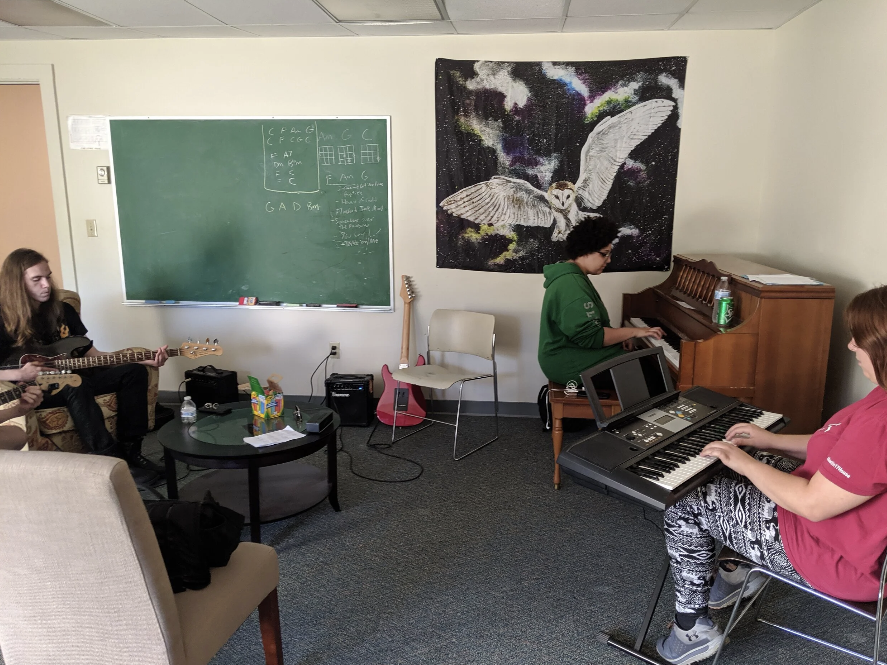
Students collaborating on a songwriting project at a community youth music therapy program.
In a group music therapy session, those shared agreements might sound like: "We support each other's ideas," "There's no wrong note," or "Everyone gets a turn." These aren't just rules — they're the foundation of a culture where creativity and vulnerability can coexist. When a group builds that culture together, the music that comes out of it means something.
That also means it’s up to the group to come to an agreement about what that means. A set of shared goals and values are foundational to any music making. The quality and inclusivity of a space is formed by individuals agreeing on what it means to respect each other and what we want to accomplish.
The therapist might be thinking about these things throughout the group. Who is feeling invested in what we are working on? Who might be willing to try something new with just a little encouragement? Who might be feeling uncomfortable? What are everyone’s boundaries?
When building community in a group, a central question the therapist might ask is, what is each participant getting from the experience?
The values that we can all get behind are what transform a room with four walls into a therapeutic space. At The Sonatina Center, this philosophy shapes everything from how our therapy rooms are arranged to how our therapists open a session. Whether you're joining an individual session or a group, you'll find a space that was designed with your comfort and participation in mind — because the environment is part of the therapy.
Ready to experience it for yourself? We'd love to welcome you. Contact us to learn more or get started.